


Author: Abdallah Hammad
Ever grabbed an item off the supermarket's shelf and wondered "who did they think would use it?"... only to see it disappear some weeks later?
Well, you might have come across a poorly designed product, if one may simplify.
It's the norm for a good percentage of new businesses and products to fail. Odds are, we'll see more of these failing products in the future, as digital fabrication and vibe coding reduce the time and cost needed to create prototypes and potentially launch “products”. What's the way to make more successful products, though?
How can more consumers'-favorites see daylight, instead of just interesting ideas that never live beyond a startup pitch or science fair?
And what can educational programs do to help?
.png)
A well-designed product is at better odds of success. Suitably skilled and educated individuals are at better odds of making them.
Different cultures and economies practice different methodologies, and consequently meet varying levels of success. What's easy to agree upon though, are some tried and tested basics of "product design".
Those don't eliminate the effect of the ecosystem, regulations or good business management, but they sure make for a good starting position.
Educational programs can play a powerful role here: creating skilled individuals. At last year’s Young Innovators’ Lab (YIL) in Amman, we took on the challenge and asked: how close can we bring students to the real-world thinking and process of product design?
The match was intuitive, given that many vital skills for good designers are already at the heart of YIL: critical thinking and problem solving, systems thinking, prototyping and iteration, and teamwork. Technical know-how develops naturally throughout the process.

Following are some samples of what, or how, the students designed:
Sidenote: YIL is primarily a thinking and learning skills development program, not purely a design program. It prioritizes learning by practice and experimentation, for the students’ own benefit. Progress of prototype isn’t prioritized over student skill acquisition.
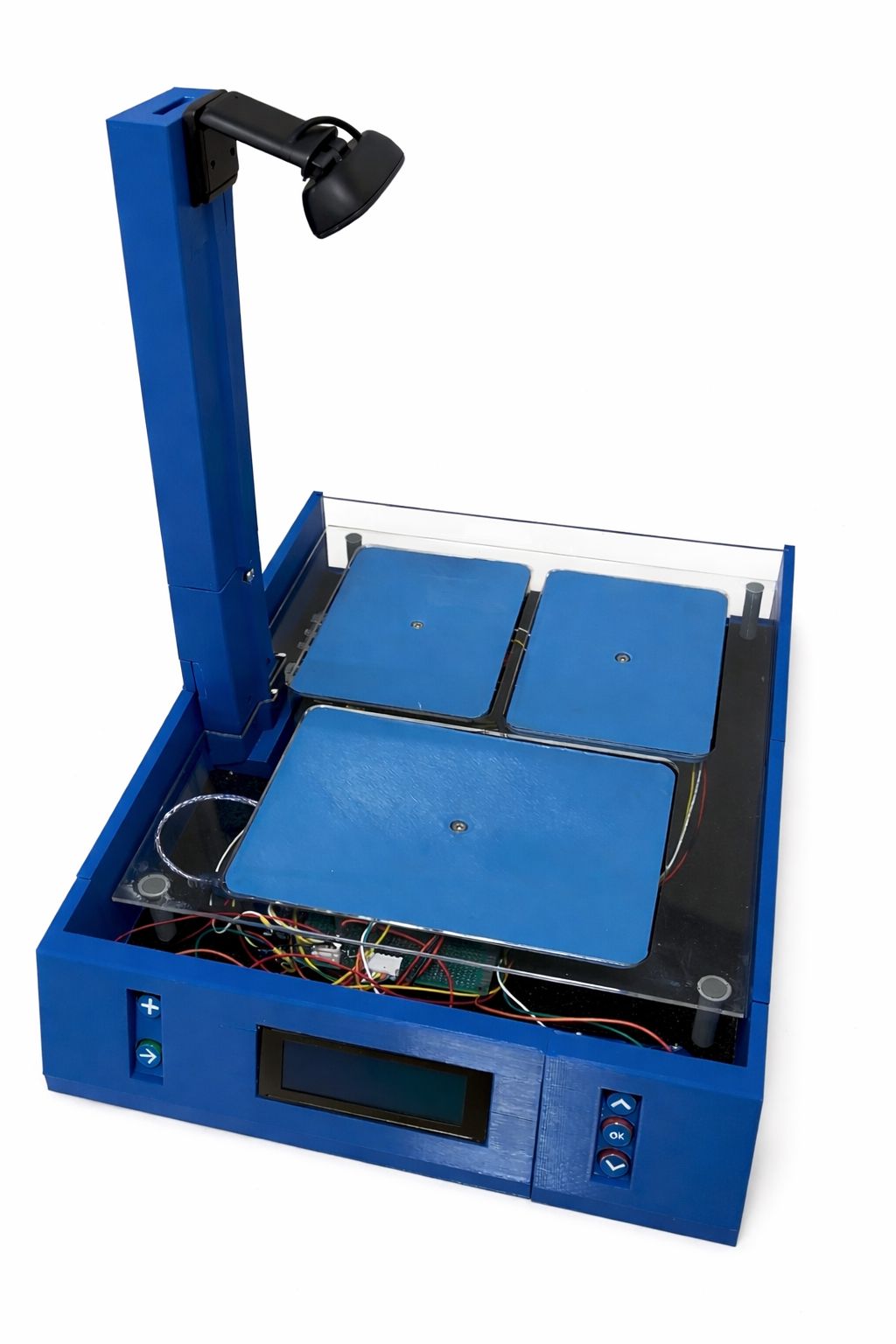
I) Insulin dose calculation assistant.
Focus: user-centered design
The learners generated a technical concept: an AI model paired with scales that measure food weight, and then support a diabetes patient in estimating food intake related insulin doses in alignment with their doctor’s recommendations. Done? No!
They wondered how to make it user friendly. Easy to use, hygienic for food, portable…besides any other criteria that might show up when examining how the patient would use it. After speaking with potential users and several iterations on the design, they arrived at a device that delivers the wanted information with minimal user actions, can deal with regional (Arabic) food varieties, and can be easily cleaned and moved.
In their learning journey, the students thought of, and decided based on users’ needs, usability, and context of use. They went through several iterations that brought them closer to a convenient user journey. In their work toward this early prototype, we see practice of the basics of user-centered design.
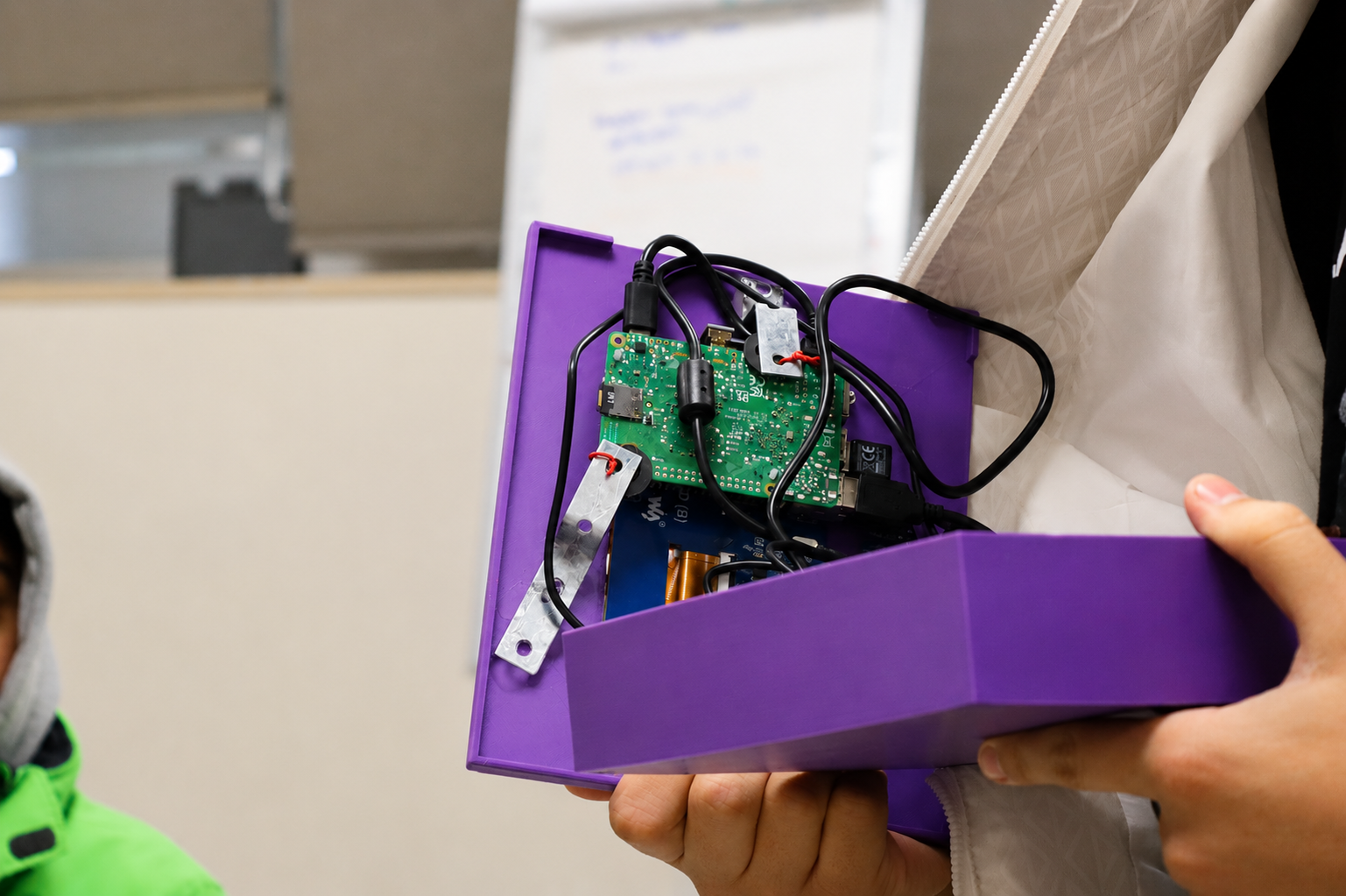
II) Assistive communication device for sign-language users in Jordan
Many Deaf and speech-disabled individuals in the Arab region face communication barriers in daily life. Proposing a purely technical concept wouldn’t solve the problem, as the issue’s intensity relates more to accessibility challenges and variety in users’ needs.
For a valuable prototype, the ideation had to sound more like “can technology bridge the communication gaps between sign-language speakers and the wider community?” and less like “can an AI sign-language translator solve non-speakers’ problems overnight?”
Through conversations with people with disabilities and sign-language interpreters, the students sought a wider understanding of the situation and of where the challenges lie. Our methodology of Socratic questioning was pushing for broader and deeper understanding (in alignment with critical thinking standards), but also led to stakeholder research, understanding context of use, and practicing interaction design. We loved seeing this synergy of thinking skills and design practice.
As the design was iterated, the user’s experience became a central focus, not just the technical aspect of employing AI to assist with sign-language interpretation. The early-stage prototype’s design thus considered design considerations like camera and screen location and orientation, portability, usability in outdoor environments, cost, and intended reliability.
So, can kids design products? They will not polish and ship them overnight! But they surely can learn to practice elements of sound design. With time, this gives us better odds of seeing younger individuals prepared to create meaningful products we would love.
More interestingly, programs that enhance thinking and learning skills among adolescents can strengthen qualities that make distinguished designers: critical thinking, problem solving, systems thinking, prototyping, iteration, teamwork, and collaboration.

Interested in our methodology?
Get in touch with us to start your journey with Thinking Oasis using our custom designed Programs.
know more through our social media platforms:


